The four urials of Pakistan.
Three of them you can hunt. One you can't. They get mixed up constantly — in catalogues, in record books, and in conversation — so here is the plain version: what each ram is, where it lives, what it carries on its head, and whether a tag exists.
Urial taxonomy is genuinely unsettled. Some authorities treat all of these as subspecies of Ovis vignei; others split them into separate species, and several lump the Blandford in with the Afghan. Record books don't always agree with biologists, and biologists don't always agree with each other.
None of that matters much standing on a ridge. What matters to a hunter is that these are four different animals, in four different ranges, hunted alongside four different species — and that's how we list them.
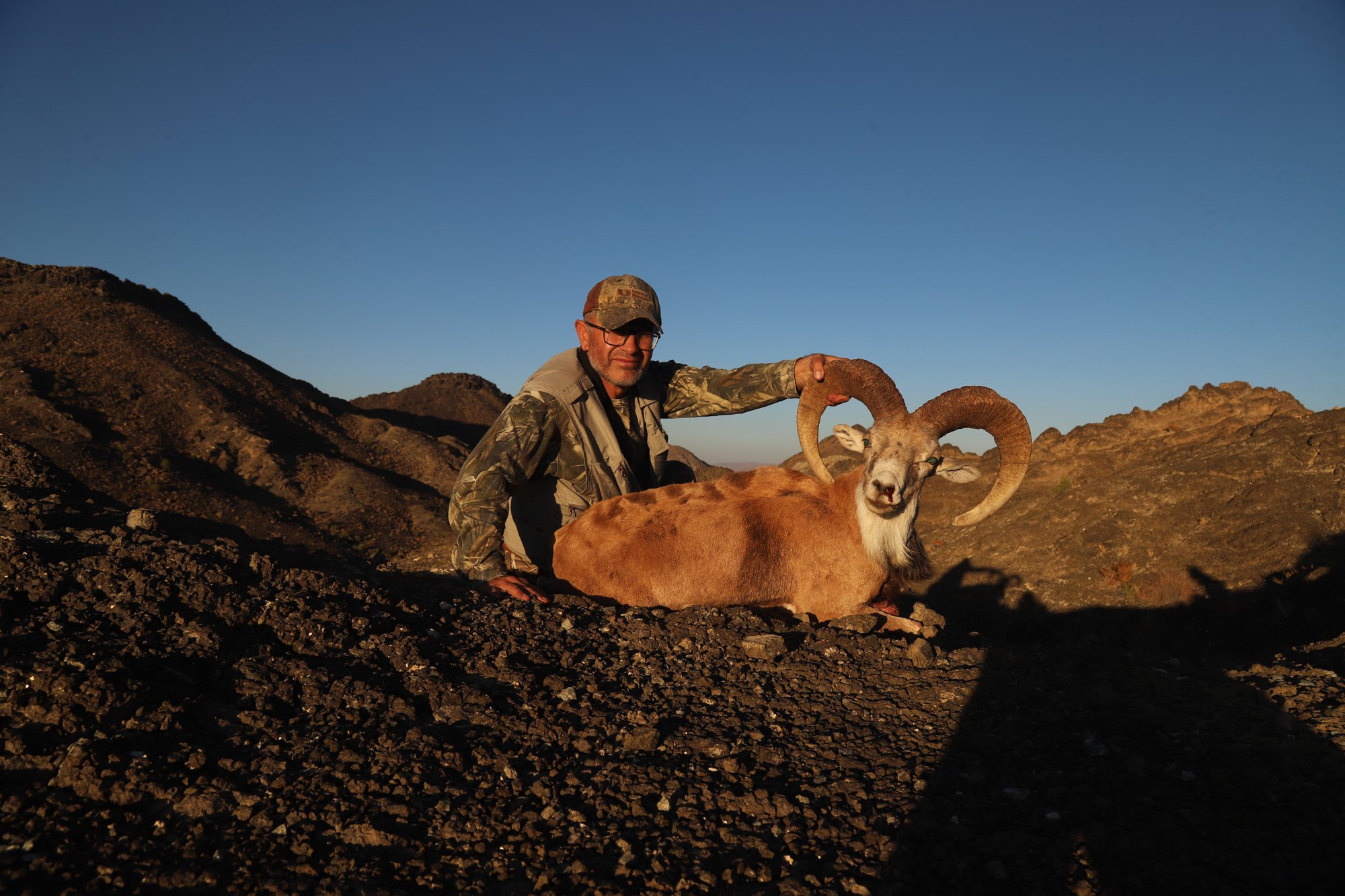
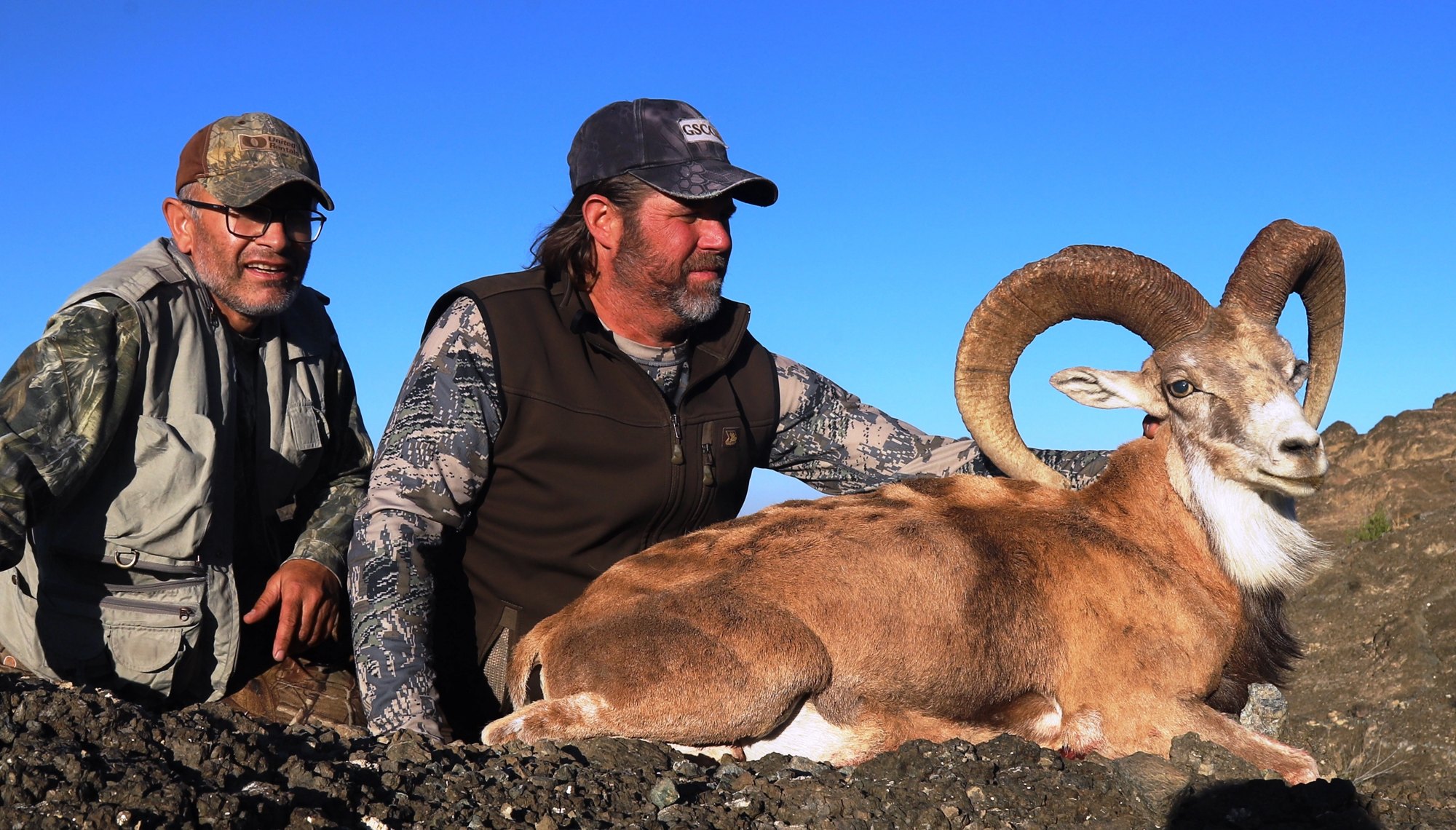
Afghan Urial
Ovis vignei cycloceros
- Range
- Sulaiman Range — Baluchistan & southern KP
- Hunted alongside
- The straight-horned Suleiman Markhor
- Horns
- Median 30.6" · record over 41"
The biggest urial of the group and the one that grows the heaviest horns. Wide arc that often closes past a full circle, deep out-sweep, and a dark throat ruff in winter coat.
Telling it apart: Largest body, longest horns, and a distinct saddle patch on the flank.
The Torghar conservation model built around this ram is one of the great community-conservation success stories in Asia — poaching collapsed once the villages had a stake in the herds.
See the hunt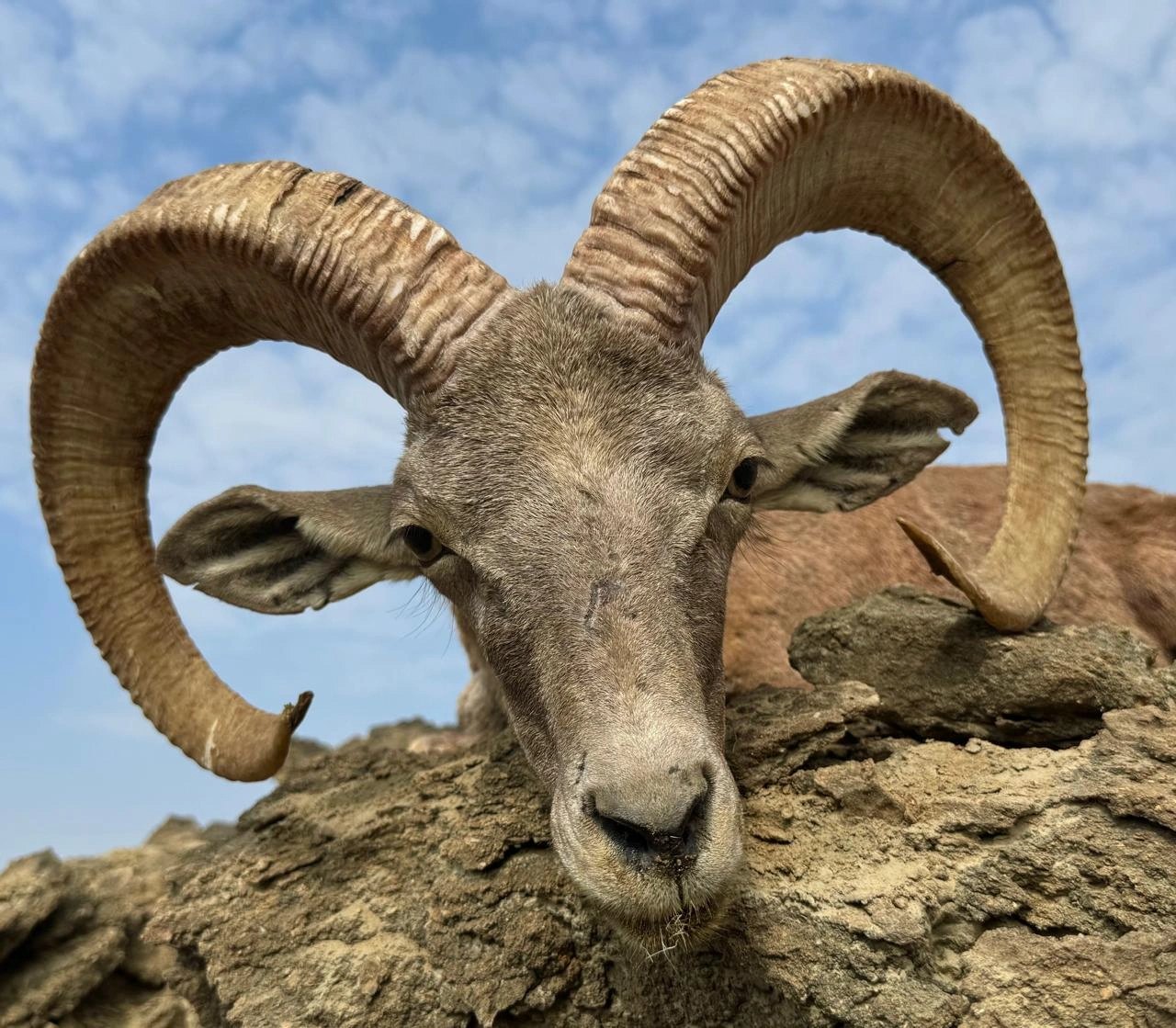
Blandford Urial
Ovis vignei blanfordi
- Range
- Southern Baluchistan & Sindh — arid desert hills
- Hunted alongside
- The Sindh Ibex
- Horns
- Median 29.3" · record around 34.5"
Also called the Baluchistan urial. Smaller and lighter than the Afghan, built for hot, low, broken desert ranges rather than high mountain country.
Telling it apart: No distinct saddle patch, smaller frame, and found far south of the Afghan's range.
This is the urial most often confused with the Afghan. The clearest separator in the field isn't the horn — it's the postcode. Blandford country is low desert alongside Sindh ibex; Afghan country is the Sulaiman highlands alongside markhor.
See the hunt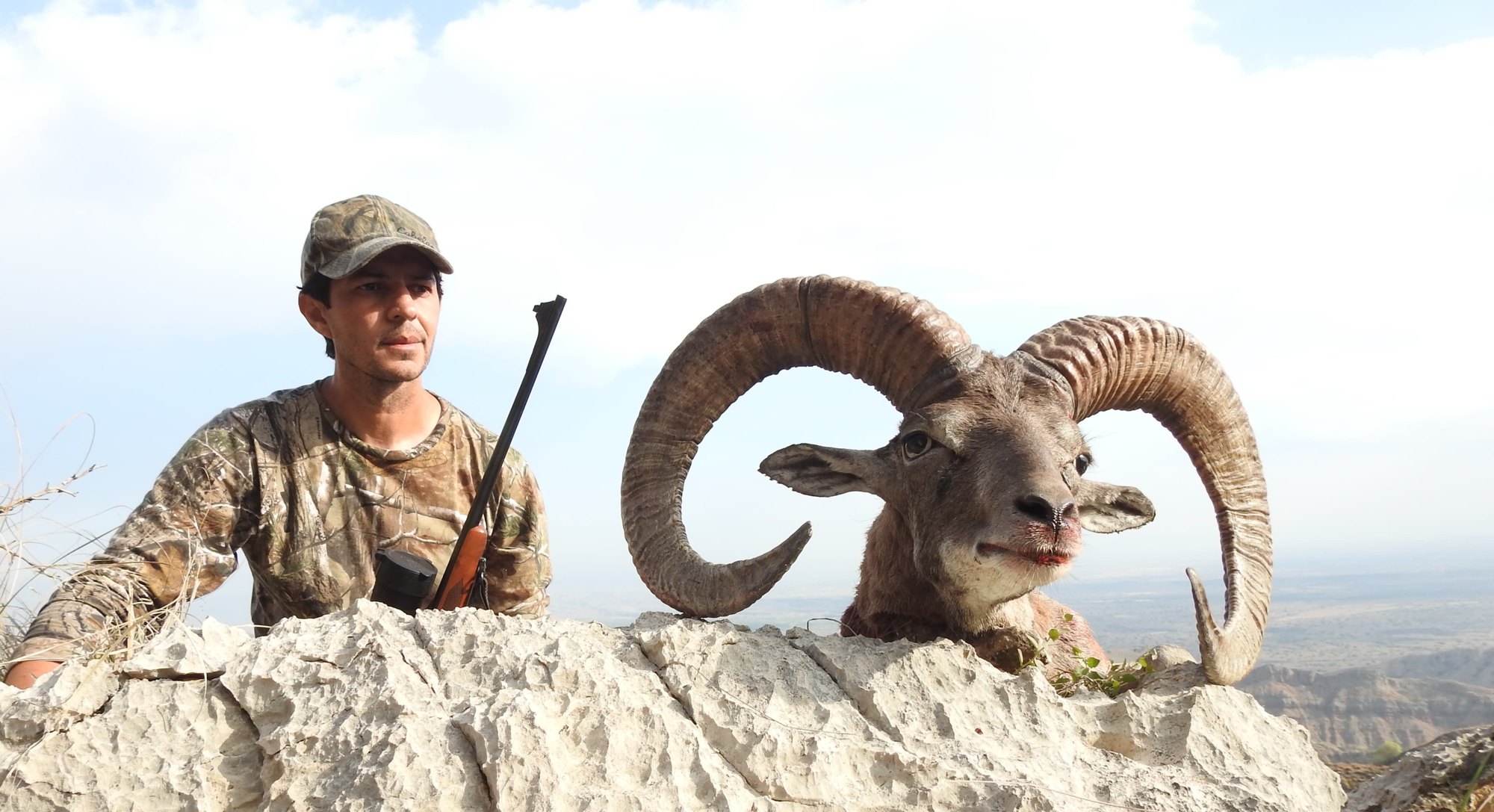
Punjab Urial
Ovis vignei punjabiensis
- Range
- Salt Range & Kala Chitta Range, northern Punjab
- Hunted alongside
- Endemic — found nowhere else on earth
- Horns
- Mean 27.9" · record 38.7"
Stocky and compact, reddish-grey with a bright white bib, a black neck ruff and often a white saddle patch. Horns are sickle-shaped, sweeping back and down rather than out.
Telling it apart: The white bib against the black ruff is unmistakable, and the horns drop rather than flare.
Endemic to two small ranges south of Islamabad. Nowhere else in the world holds this animal, which is exactly why the quota stays tiny.
See the huntNo Dispatch field photo — we don't hunt this animal.
Ladakh Urial
Ovis vignei vignei
- Range
- Indus valley, Gilgit-Baltistan — and Ladakh, India
- Hunted alongside
- Shares the Indus gorges with Himalayan ibex
- Horns
- Not applicable — no legal trophy hunting
Separated from the others by the size and colour of its winter neck ruff, its saddle patch and a differently shaped horn. Handsome, and completely off limits.
Telling it apart: You'll only see this one through glass. Roughly 200–450 remain in Pakistan.
We list it because a hunter shopping for a Pakistani urial should know it exists and know it is not for sale. Anyone offering you a Ladakh urial tag is selling you something that doesn't legally exist.
The whole picture on one screen
| Urial | Range | Hunted alongside | Horns avg / record | This season |
|---|---|---|---|---|
| Afghan | Sulaiman Range, Baluchistan & KP | Suleiman Markhor | 30.6" / 41"+ | 1 tag |
| Blandford | S. Baluchistan & Sindh | Sindh Ibex | 29.3" / 34.5" | 3 tags |
| Punjab | Salt & Kala Chitta Ranges | Endemic — none | 27.9" / 38.7" | 2 tags |
| Ladakh | Indus valley, Gilgit-Baltistan | Himalayan Ibex | — | None — protected |
Horn figures are drawn from published record-book and survey data and are given as a guide only — a mature representative ram, not a target to hold out for. Permit counts are our own allocation for the 2026/27 season and move as tags are claimed.