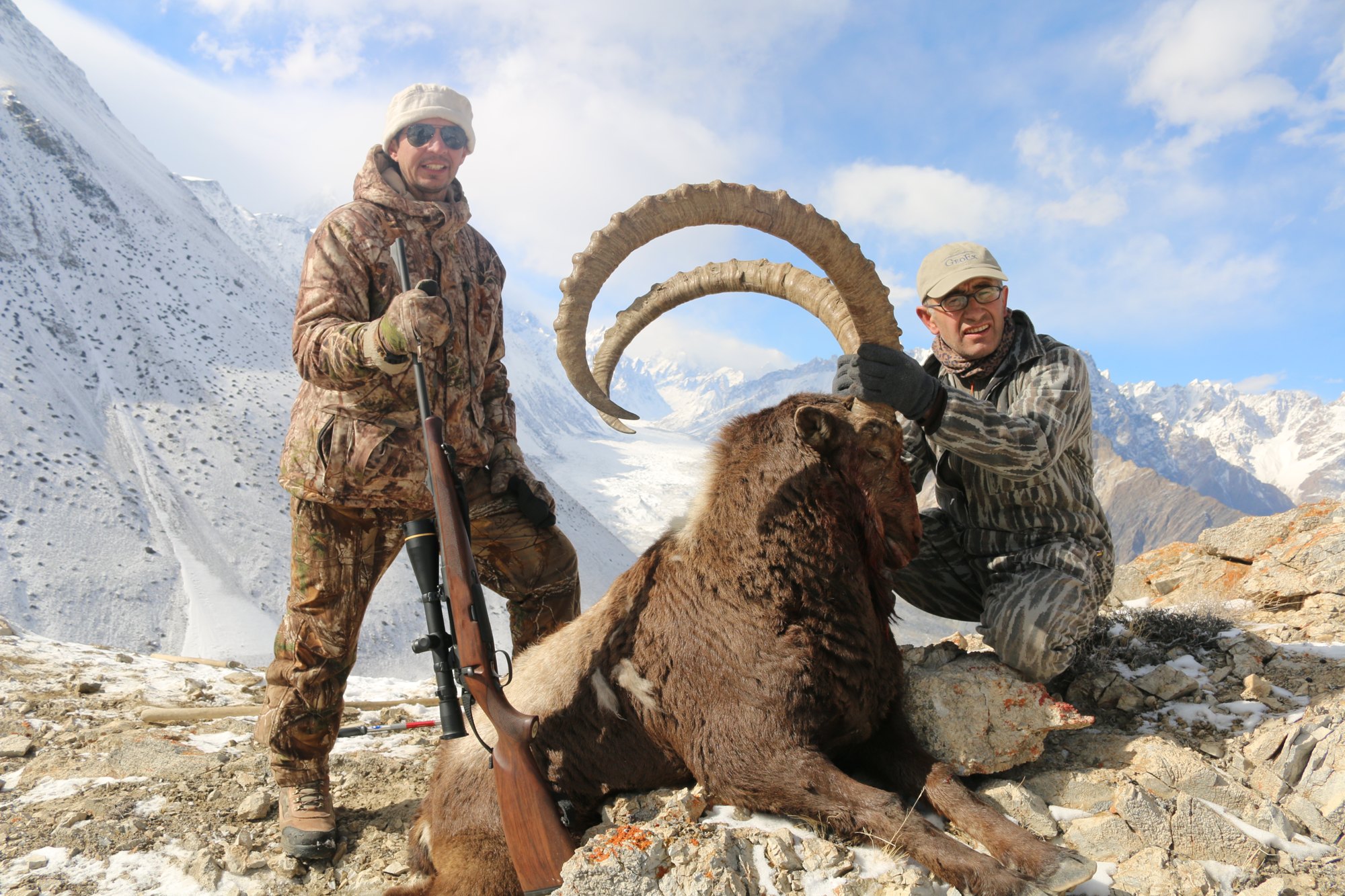
Himalayan or Sindh? They aren't the same animal.
Both get called 'ibex' and both are sold as Pakistani ibex hunts, but they are different species, in different mountains, hunted in completely different conditions. One is a true ibex at 15,000 feet in the snow. The other is a wild goat in the desert hills near the coast.
The Himalayan ibex is Capra sibirica — a genuine ibex, the same species that ranges across Central Asia to Mongolia. The Sindh ibex is Capra aegagrus, the wild goat that gave us the domestic goat and the bezoar of Iran and Turkey. They are not close relatives, and no record book counts them as the same trophy.
Practically, the choice comes down to what kind of trip you want. The Himalayan is a high, cold, physically serious mountain hunt for a heavier trophy. The Sindh is a warm, low, accessible desert stalk that pairs with a urial. Book the wrong one for your fitness or your season and you'll be disappointed in an animal that did nothing wrong.
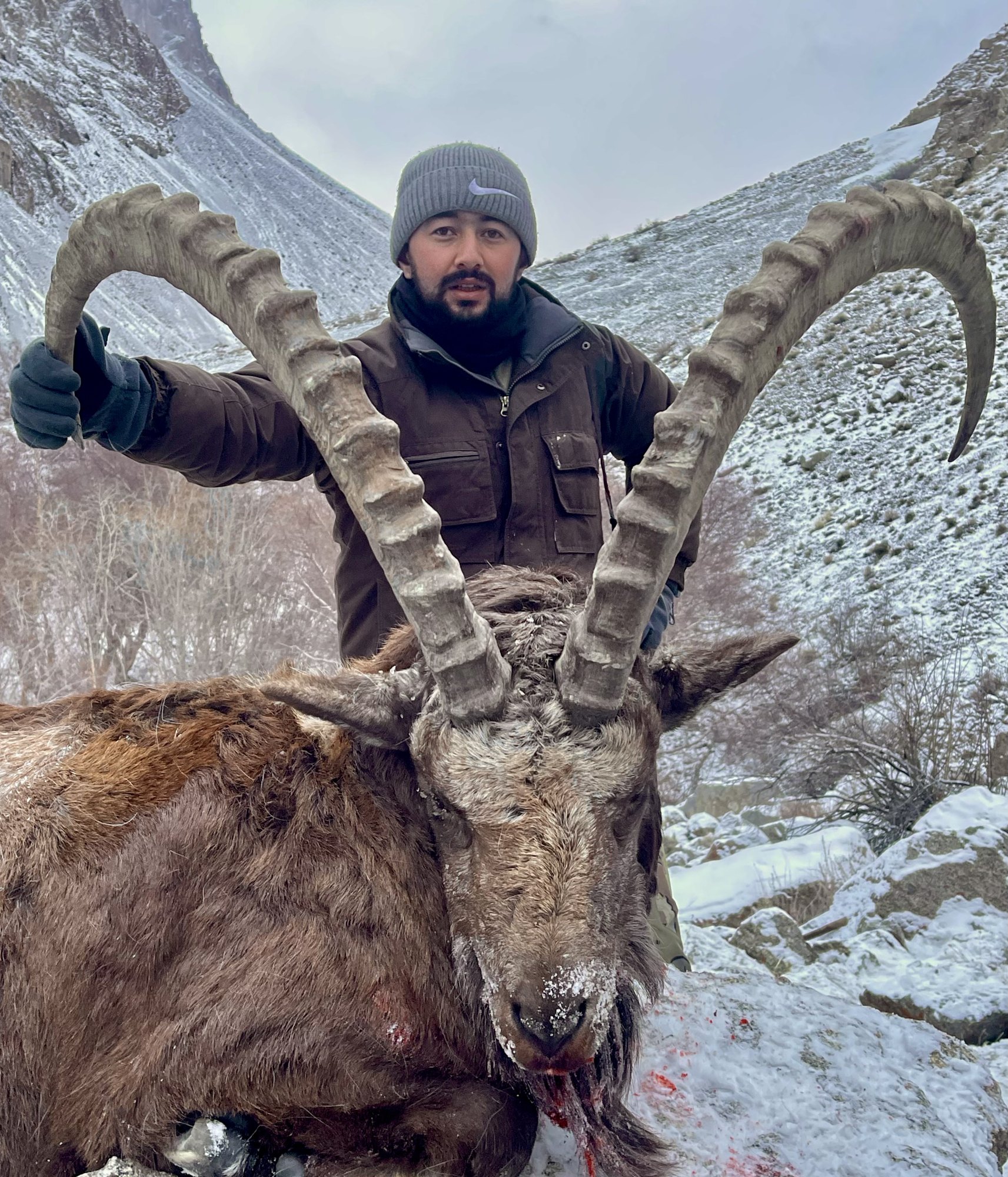
Himalayan Ibex
Capra sibirica sakeen
- Range
- Karakoram, Hindu Kush & Himalaya — Gilgit-Baltistan, Chitral, AJK
- Altitude
- 11,500–16,500 ft, dropping lower only in deep snow
- Horns
- 36"–58" on mature billies
- Season
- Nov 1 — Apr 25
A true ibex, and a big one. Heavy, deeply ridged horns sweep back in a long scimitar with prominent knobs along the front keel, over a thick dark winter coat and a full beard. This is high-altitude hunting in the proper sense — snow, thin air and glassing across enormous country from a camp you walked into.
Telling it apart: Size and altitude. Bigger body, longer and more heavily knobbed horns, and it lives above 11,000 ft in the northern ranges.
The most attainable of Pakistan's mountain trophies and the best introduction to hunting there — strong populations, well-established community conservancies, and the shortest route to a genuinely hard-won ibex.
See the hunt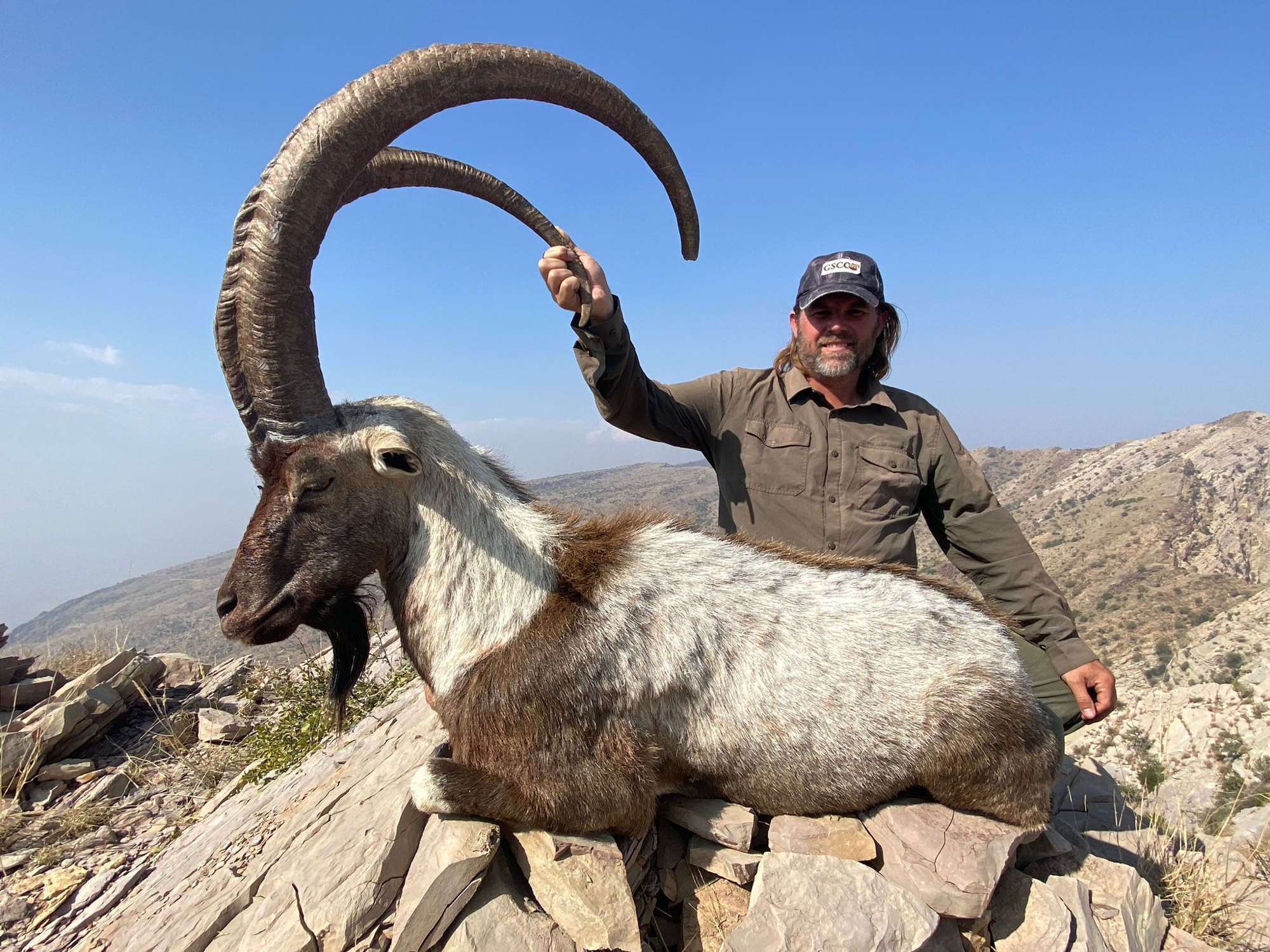
Sindh Ibex
Capra aegagrus blythi
- Range
- Kirthar Range, Sindh Kohistan & the Makran coast, Baluchistan
- Altitude
- Near sea level to roughly 3,600 ft
- Horns
- 38"–40" typical · historic record 52.5"
- Season
- Nov 1 — Mar 31
Not actually an ibex at all — it's a wild goat, the same lineage as the bezoar of the Middle East. Paler and smaller than its northern cousin, with thin, elegant scimitar horns that sweep up and out and carry few or no knobs on the front keel. Hunted in hot, arid, low desert-mountain country out of Karachi.
Telling it apart: Pale coat, smaller frame, smooth front keel with minimal knobs — and it lives in southern desert hills, not northern snow.
Hunted in the Dureji and Kirthar conservancies. Because the ground is low and the camps are close to Karachi, this is a far easier trip physically than the Himalayan — and it pairs naturally with a Blandford urial on the same licence run.
See the huntTwo ibex, side by side
| Ibex | Species | Range | Altitude | Horns typical / record | This season |
|---|---|---|---|---|---|
| Himalayan | Capra sibirica — true ibex | Karakoram & Hindu Kush | 11,500–16,500 ft | 36"–58" | 3 permits |
| Sindh | Capra aegagrus — wild goat | Kirthar & Makran, Sindh | Sea level–3,600 ft | 38"–40" / 52.5" | 3 permits |
Horn figures come from published record-book and survey data and describe a mature representative animal, not a target to hold out for. Permit counts are our own 2026/27 allocation and move as tags are claimed. A combo taking both on one trip is available — ask an advisor.