Which markhor are you actually buying?
Markhor is the most coveted goat on earth and the most confusingly labelled. Four names get used in Pakistan — Astor, Kashmir, Suleiman and Skardu — but they don't all describe what you'd assume, and one of them isn't a subspecies at all. At these prices, it's worth knowing exactly what's on the licence.
The IUCN and CITES both simplify markhor into two groups by horn shape. Flare-horned markhor — the Astor and Kashmir types — carry wide, flat horns that branch away from the skull in an open twist. Straight-horned markhor — the Suleiman and Kabul types — carry tight, upright corkscrews and are smaller in the body, living in arid hills rather than high cliffs.
Get that division straight and the rest follows. Historically four Pakistani subspecies were recognised; several authorities now merge Astor with Kashmir, and Suleiman with Kabul. What never changes is the horn shape and the mountain range — and those are what you're actually choosing between.
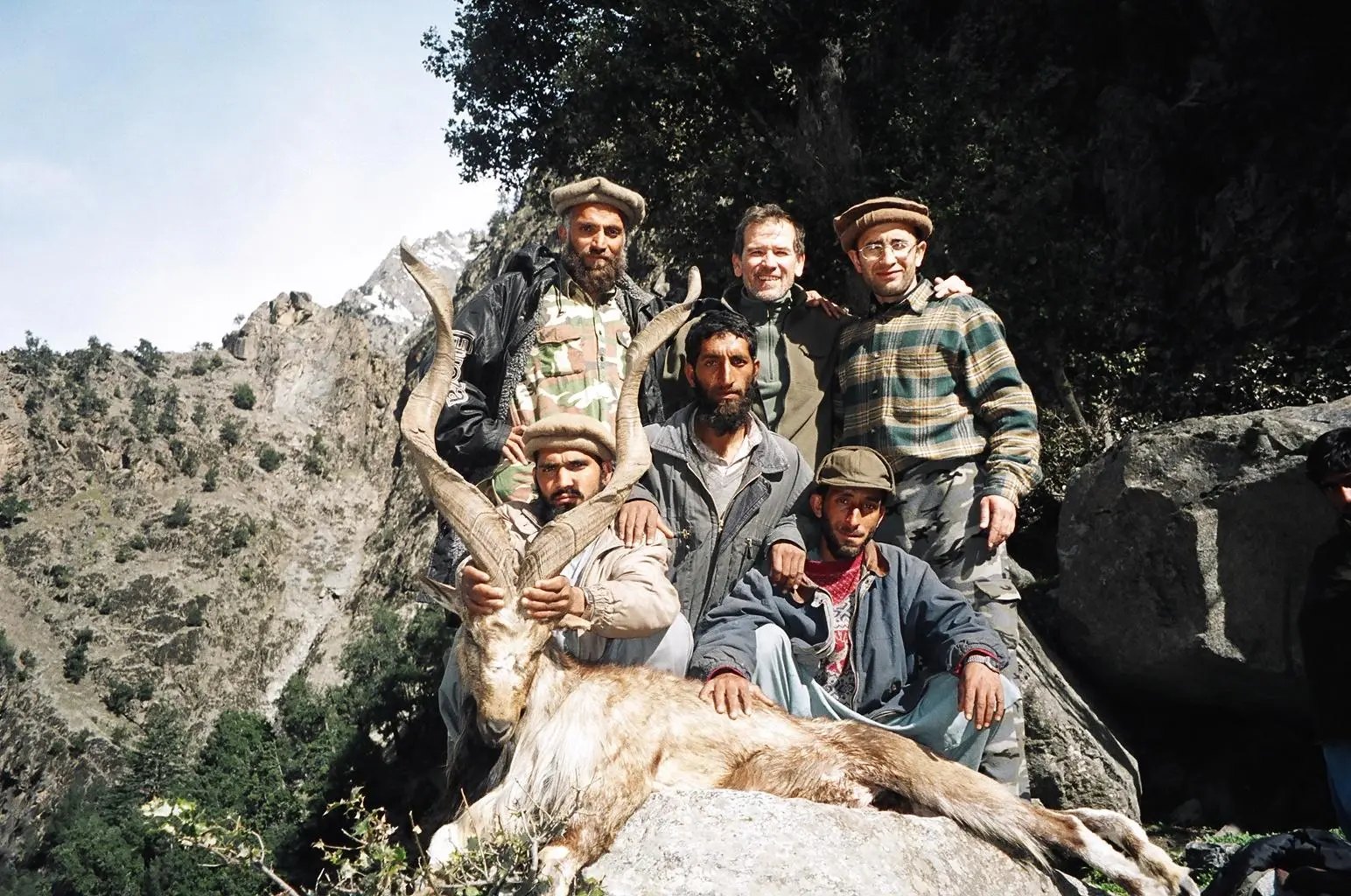
Astor Markhor
Capra falconeri falconeri
- Group
- Flare-horned
- Range
- Gilgit-Baltistan — Nanga Parbat massif, Gilgit, Astore, Skardu
- Horns
- Wide, flat, open spiral · records approaching 63"
- Season
- Nov 1 — Apr 15
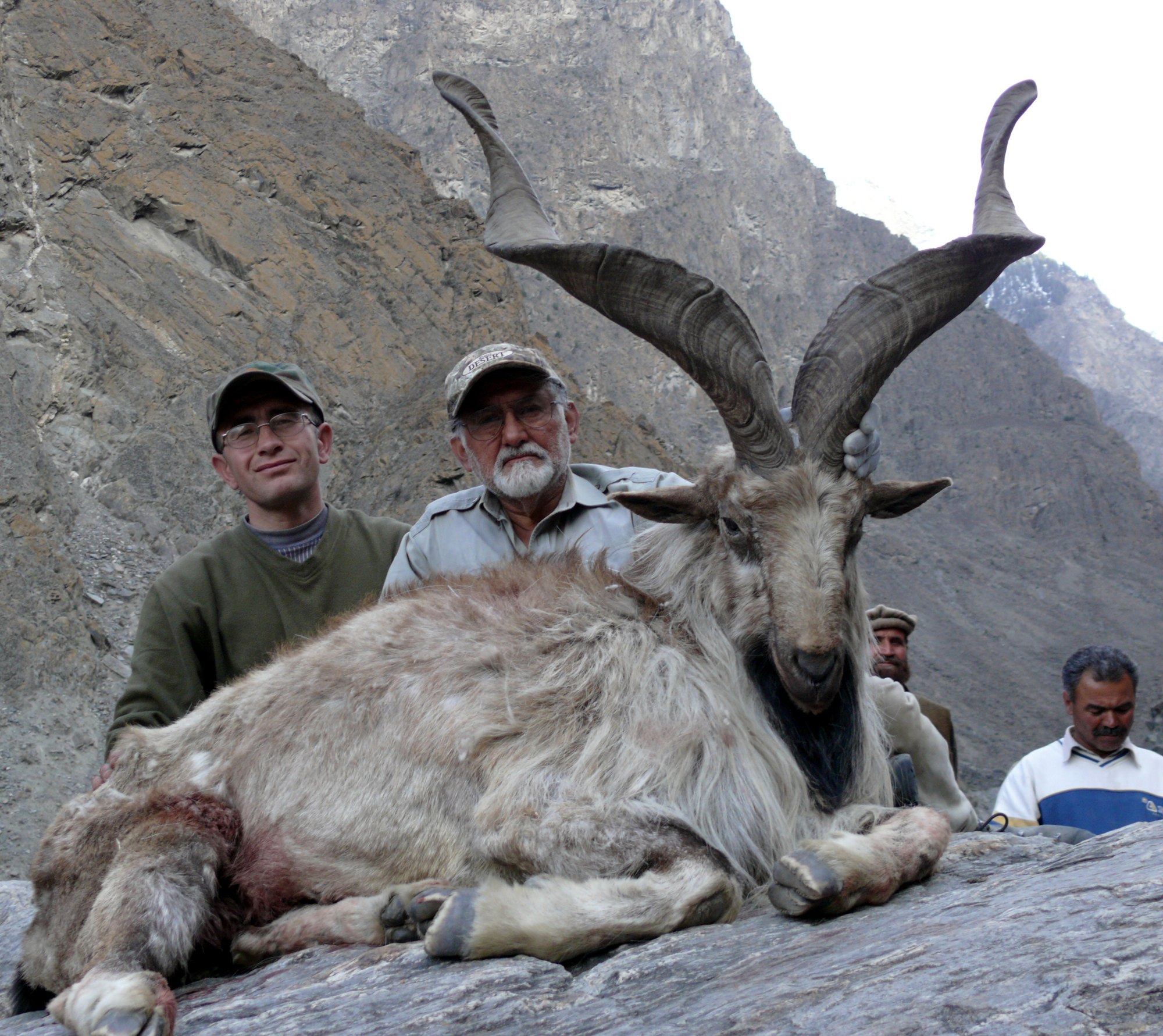
The national animal of Pakistan and the archetypal markhor: big, flat horns that branch wide of the skull and climb in roughly a half-turn, over a heavy silver winter cape. Hunted on sheer cliff faces above the Indus and Astore valleys — technical, exposed, cold ground.
Telling it apart: Horns flare outward and upward with an open twist. Wide is the word — you can see the spread from a long way off.
Gilgit-Baltistan auctions its markhor permits publicly and set a $200,000 base price for 2026/27, with 80% of the fee going straight to the village conservancies. Last season's Astor tags ran as high as $370,000.
See the hunt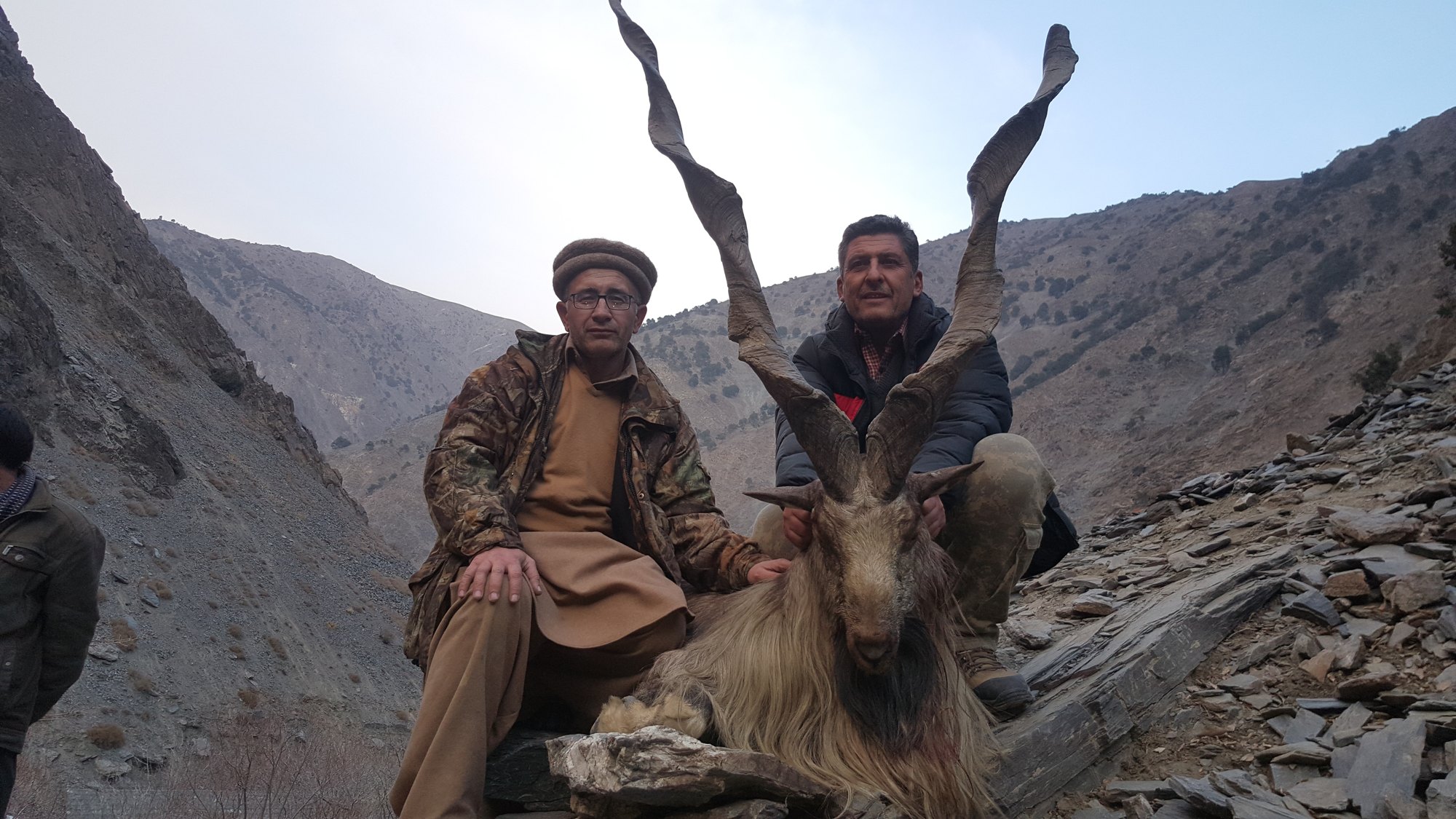
Kashmir Markhor
Capra falconeri cashmiriensis
- Group
- Flare-horned
- Range
- Chitral & Kohistan, Khyber Pakhtunkhwa — Chitral Gol, Tooshi
- Horns
- The heaviest of them all · huge open corkscrew
- Season
- Nov 1 — Apr 15
Also called the Pir Panjal markhor. The same flare-horned group as the Astor, but this is the mass king — the longest, heaviest horns and the most spectacular winter cape and beard of any markhor. Holly-oak and cedar slopes breaking into bare cliff.
Telling it apart: Flared like the Astor but noticeably heavier in horn and cape, and it lives west in Chitral rather than north in Gilgit-Baltistan.
Chitral Gol and Tooshi are the great success story of Pakistani conservation — markhor numbers there have climbed for three decades. An American hunter paid $270,000 for a Chitral tag earlier this year.
See the hunt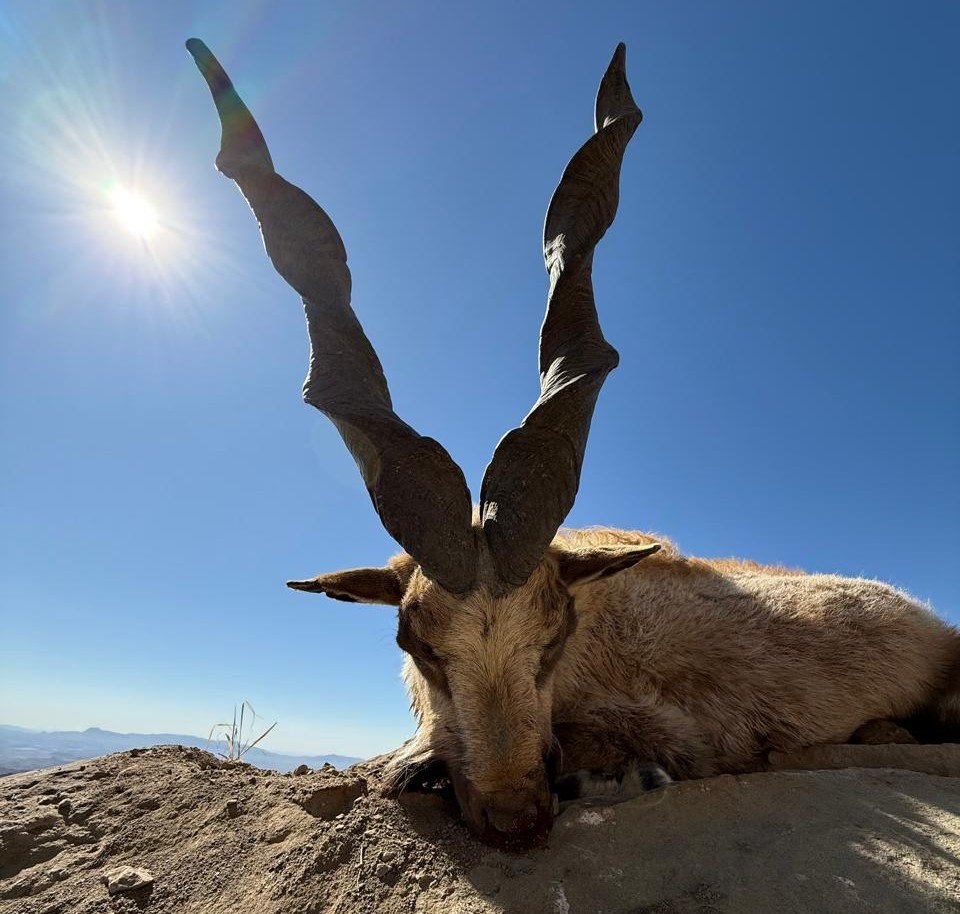
Suleiman Markhor
Capra falconeri jerdoni
- Group
- Straight-horned
- Range
- Sulaiman Range — Torghar, Baluchistan & southern KP
- Horns
- Tight, upright multi-turn corkscrew
- Season
- Nov 1 — Mar 31
A completely different-looking animal. The horns don't flare at all — they rise almost vertically in a tight, close corkscrew, sometimes through several full turns. Smallest of the markhor phenotypes, built for arid, broken desert hills rather than snow cliffs.
Telling it apart: If the horns spiral tightly upward instead of flaring outward, you're looking at a straight-horned markhor.
Torghar's community programme took this animal from under 100 individuals in the mid-1980s to a recovered population — the same conservancy that produces the Afghan urial we do offer. Ask an advisor if a Suleiman tag becomes available.
Not a distinct animal — see the note.
"Skardu Markhor"
Not a subspecies
- Group
- Flare-horned (Astor)
- Range
- Skardu district, Gilgit-Baltistan
- Horns
- Same as Astor
- Reality
- A place name, not a subspecies
You will see "Skardu markhor" advertised, and photographs labelled that way. Skardu is a district in Gilgit-Baltistan that sits inside the Astor markhor's range — the animal taken there is a flare-horned Astor markhor, hunted in a different valley.
Telling it apart: There is nothing to tell apart. It's an Astor markhor with a locality attached.
We spell this out because locality names get sold as if they were rarer subspecies. If someone quotes you a premium for a "Skardu markhor" over an Astor, you're paying extra for geography, not for a different trophy.
Four names, three animals, two horn shapes
| Name | Group | Range | Horn character | This season |
|---|---|---|---|---|
| Astor | Flare-horned | Gilgit-Baltistan | Wide, flat, open half-turn | 1 tag · sealed bid |
| Kashmir | Flare-horned | Chitral & Kohistan, KP | Heaviest · huge open spiral | 1 tag · sealed bid |
| Suleiman | Straight-horned | Sulaiman Range, Baluchistan | Tight upright corkscrew | Not offered |
| Skardu | Flare-horned | Skardu, Gilgit-Baltistan | Same as Astor | A locality, not a subspecies |
Record horns for the species reach roughly 63 inches, but averages depend heavily on the population — judge a billy on mass, cape and age, not on a number from a book. Both Dispatch tags are awarded by sealed bid; the reserve is not published.